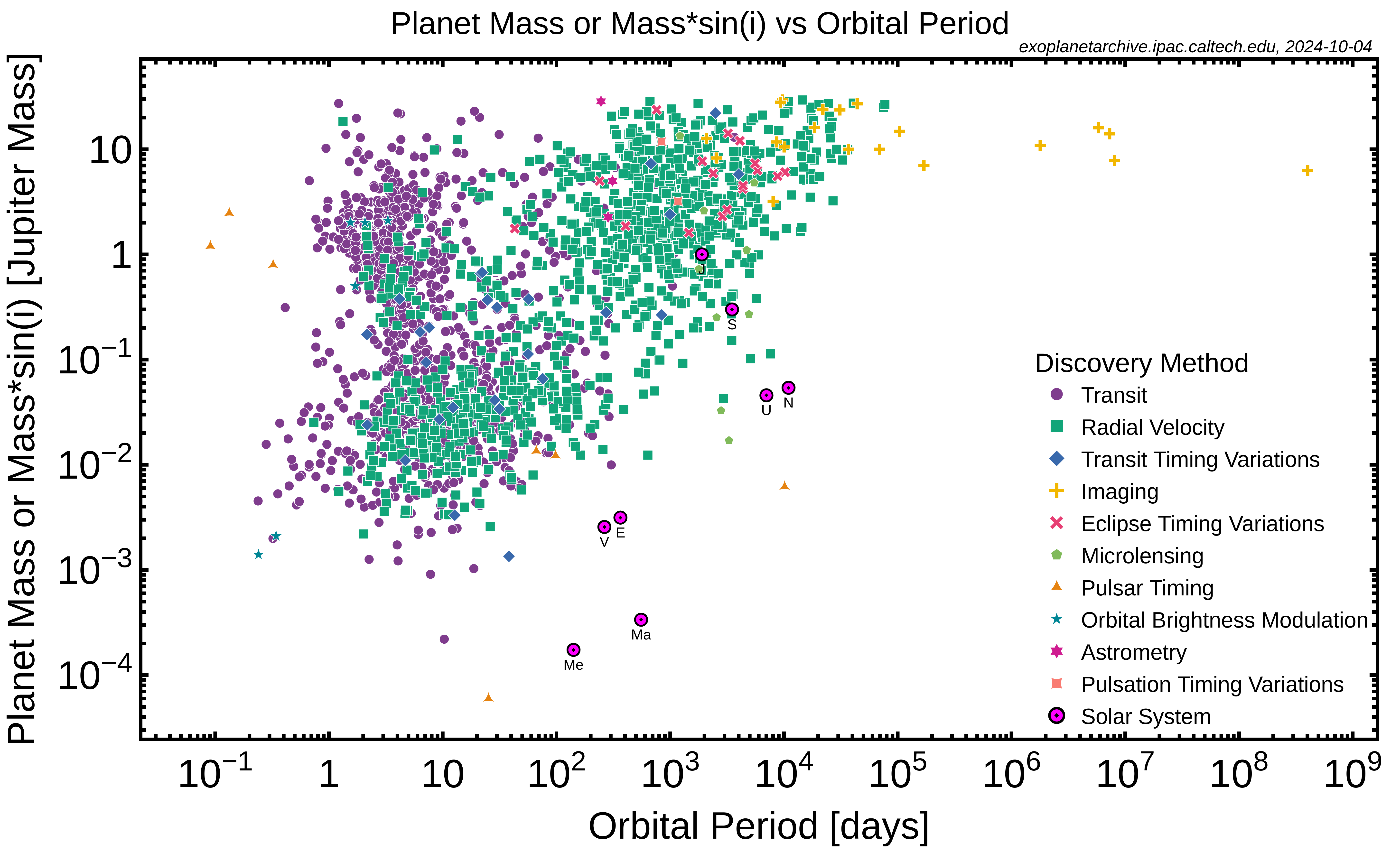
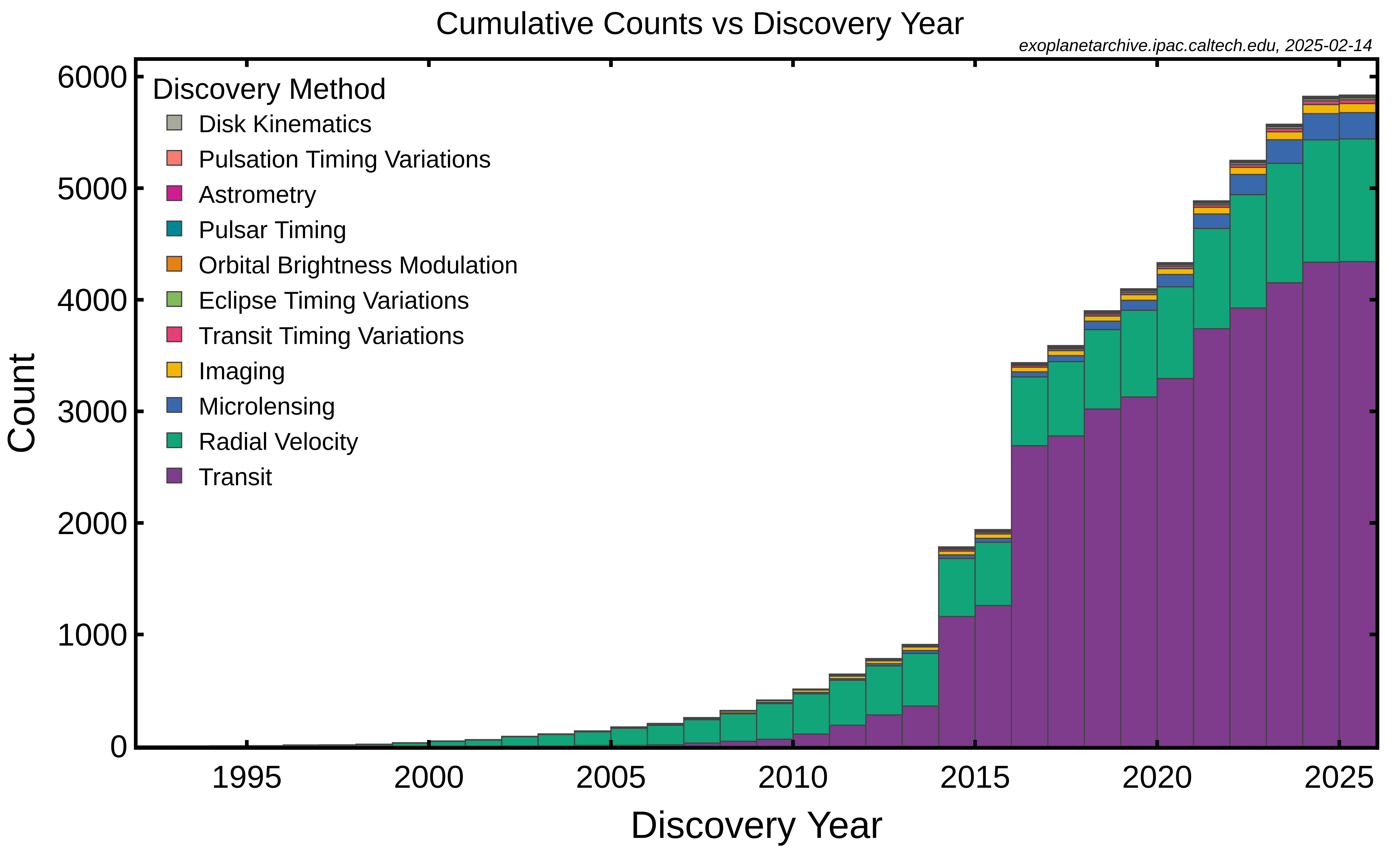
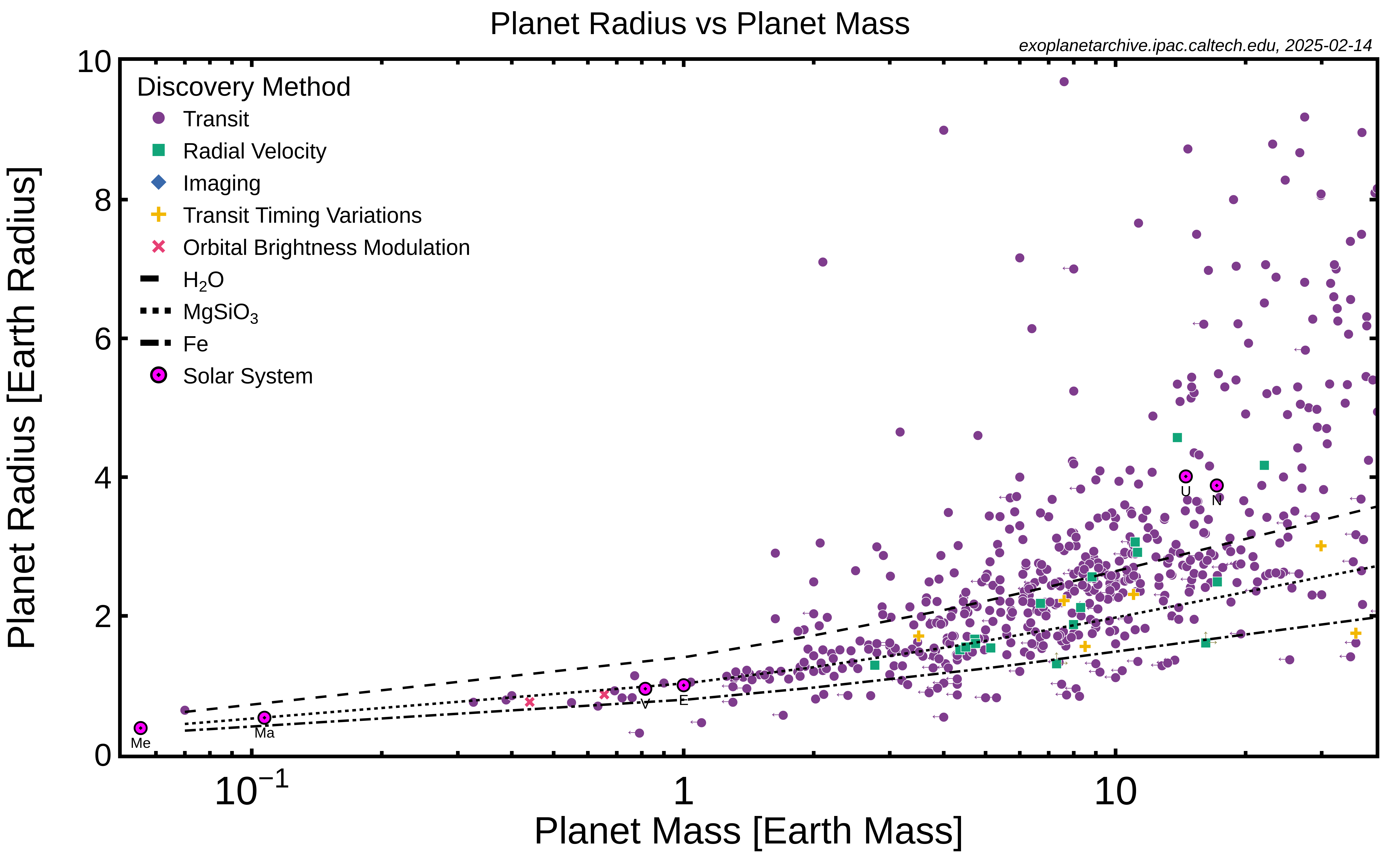
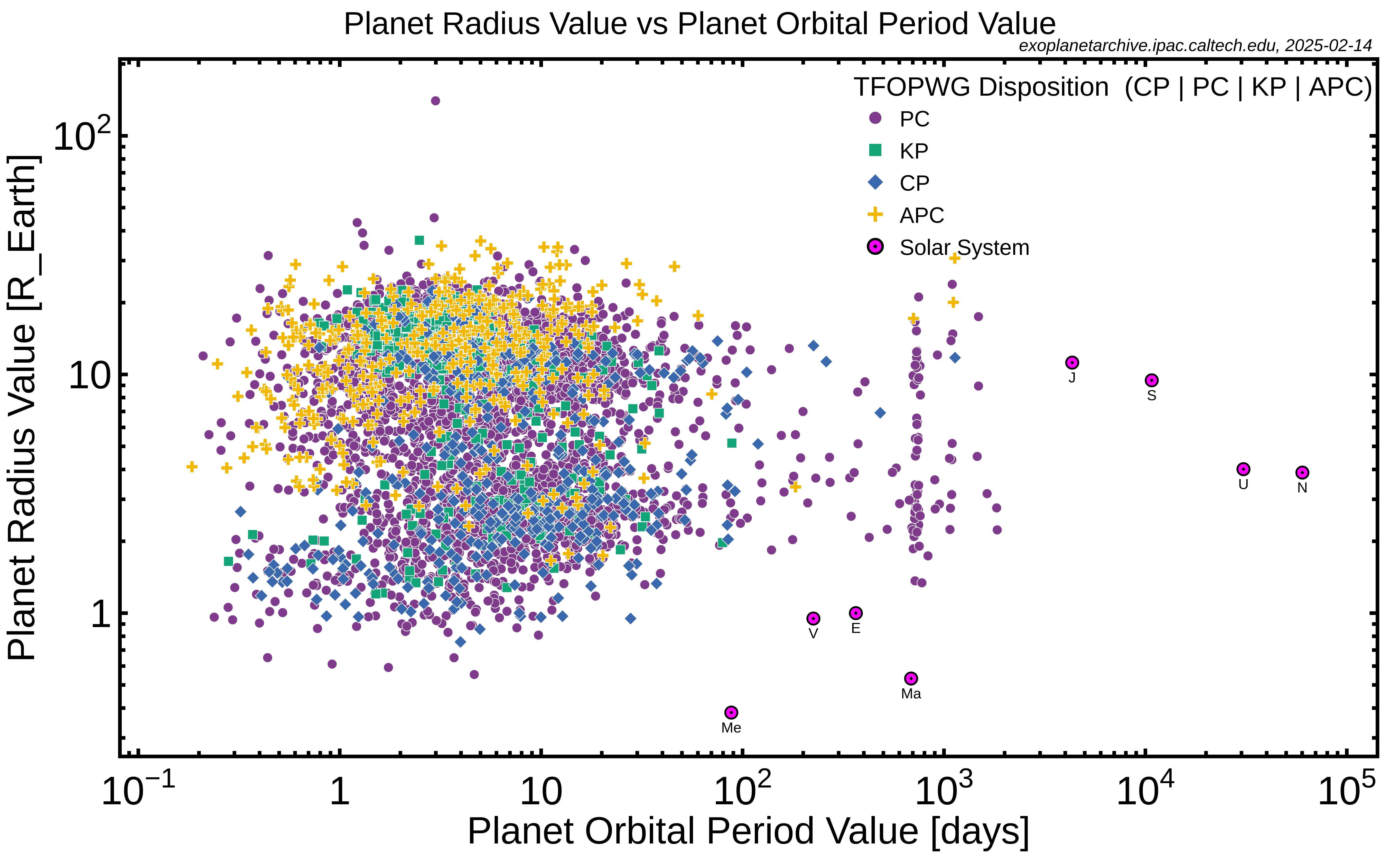
The NASA Exoplanet Archive collects and serves public data to support the search for and characterization of extra-solar planets (exoplanets) and their host stars. The data include published light curves, images, spectra and parameters, and time-series data from surveys that aim to discover transiting exoplanets. Tools are provided to work with the data, particularly the display and analysis of transit data sets from Kepler and CoRoT. All data are validated by the Exoplanet Archive science staff and traced to their sources. The Exoplanet Archive is the U.S. data portal for the CoRoT mission.
January 12, 2012: Six new planets have been added. This includes four new planets from the HATNet project (HAT-P-34b, HAT-P-35b, HAT-P-36b, HAT-P-37b) and two new circumbinary binary planets from the Kepler project (Kepler-34b and Kepler-35b). Also, check out our new page of Frequently Asked Questions (and their answers). If you have a question that is not on the page, consider sending it to our Help Desk.
January 9, 2012: Kepler light curves from quarters 4, 5 and 6 are now available in the archive. You can access the FITS files by clicking the Kepler Light Curves link in the upper-left corner of our home page.
January 5, 2012: Five Kepler planets have been added: Kepler-20b, Kepler-20c, Kepler-20d, Kepler-20e, Kepler-20f. Also, the Exoplanet Archive has been updated to include additional file download options and better support for Internet Explorer.
December 15, 2011: Two planets have been added: CoRoT-19b and CoRoT-23b.
Please include the following standard acknowledgment in any published material that makes use of the archive's services:
"This research has made use of the NASA Exoplanet Archive, which is operated by the California Institute of Technology, under contract with the National Aeronautics and Space Administration under the Exoplanet Exploration Program."