Current Exoplanet Archive Holdings


866 Planets around 671 Stars
133 Systems with Multiple Planets
2,712 Kepler Candidates and Confirmed Planets
2,922,226 Transit Survey Light Curves

Date of last update of KOI table: 2013-04-30


  • Planet parameters are updated weekly
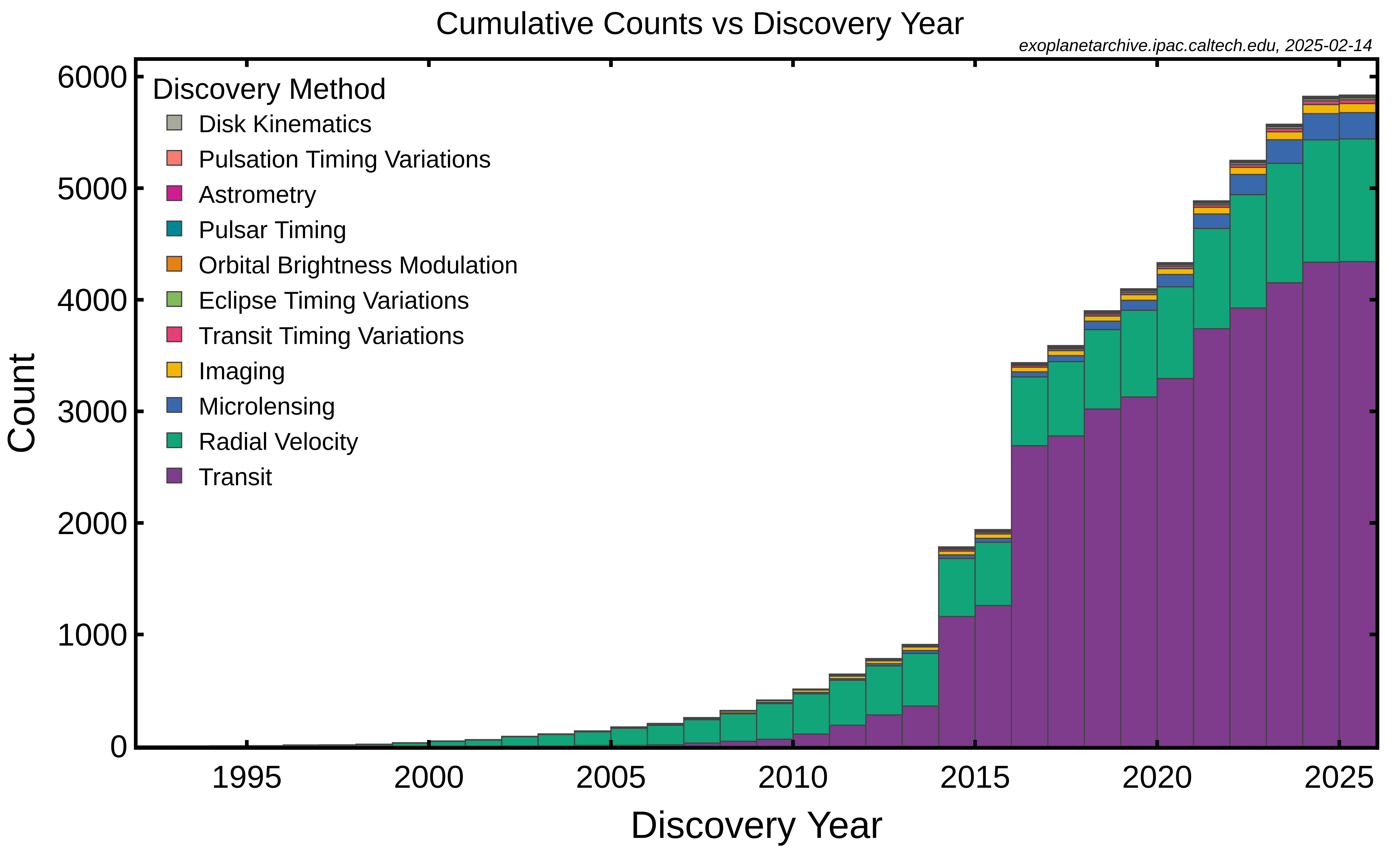
  • See the Planet Counts page for a breakdown by discovery method
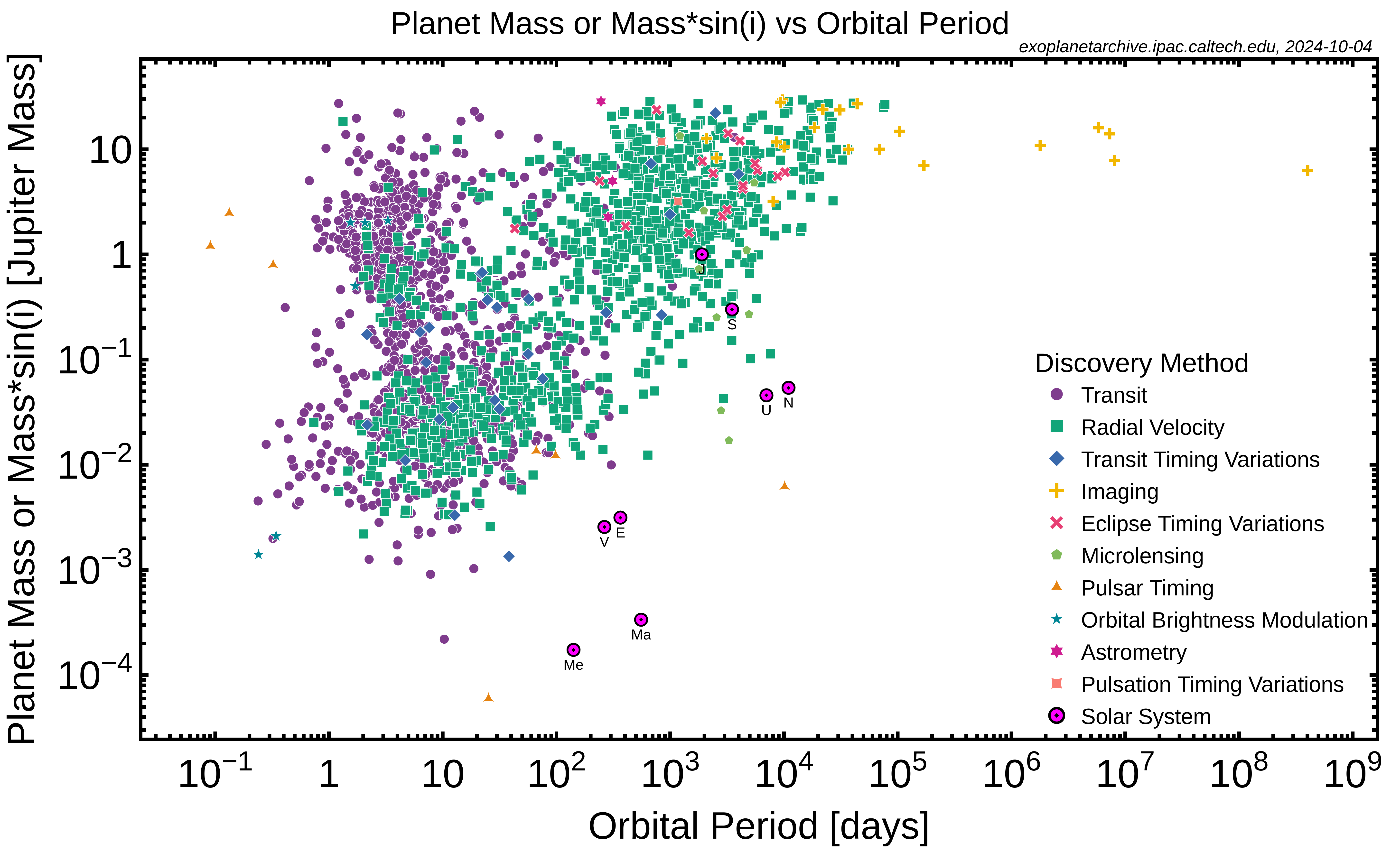
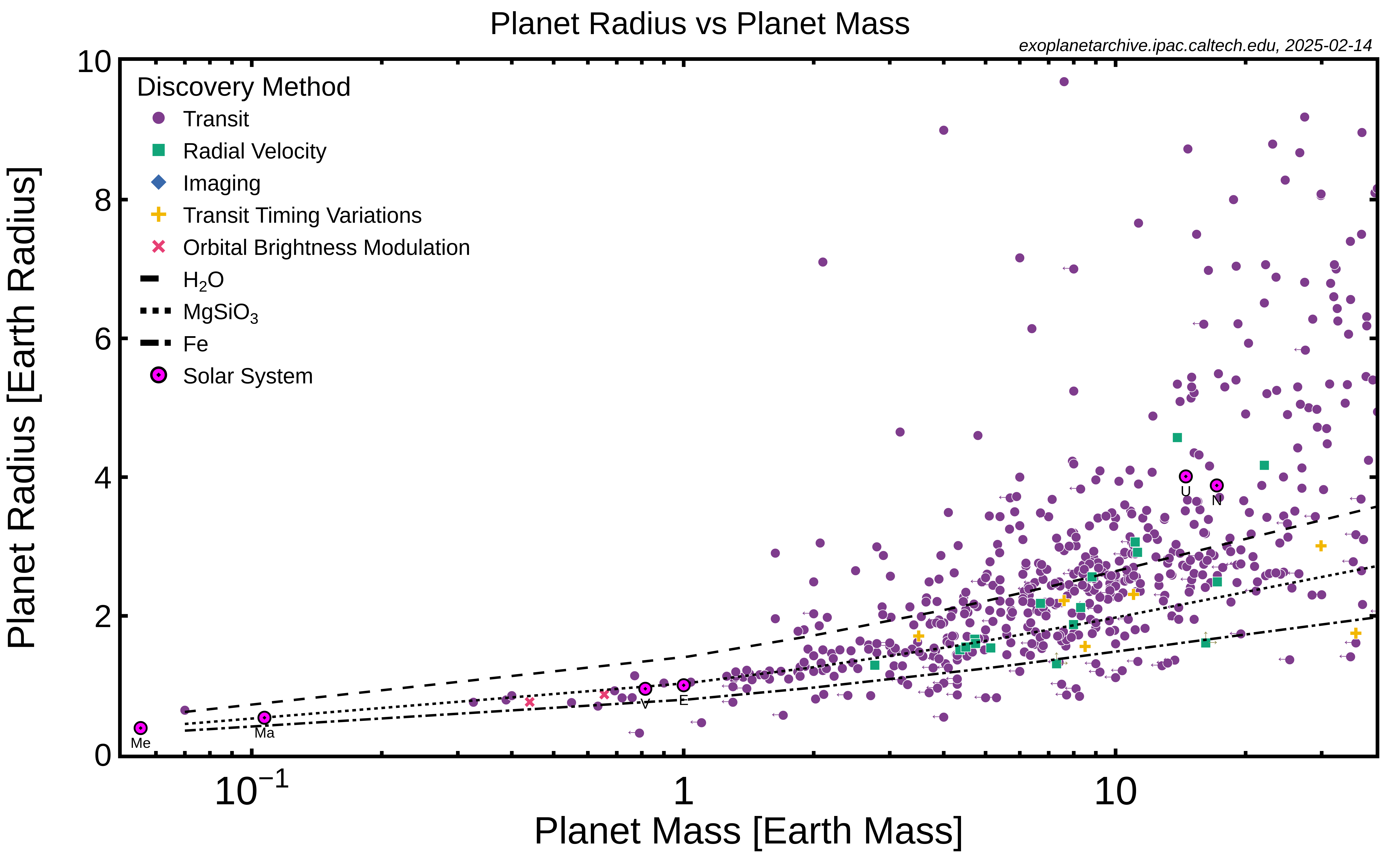
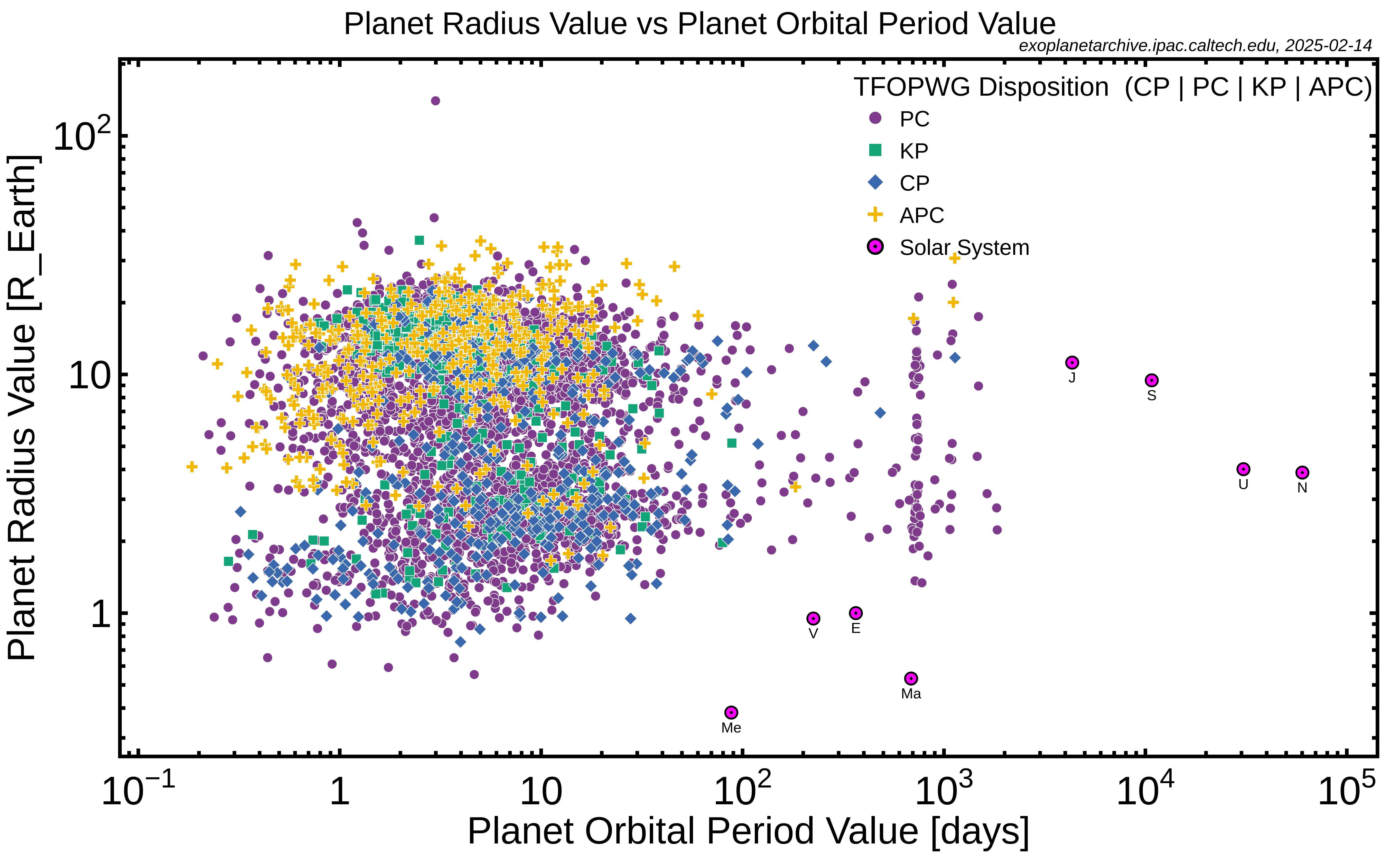
  • Pre-generated plots (see example, right) for exoplanets and Kepler candidates are also available

Latest News


May 16, 2013: Kepler light curve data sets for quarter 15 are now available in the archive. To access, click the Kepler Light Curves link on the left side of our home page. The Q15 light curves utilize a new processing version of the Kepler pipeline called "multi-scale MAP," as opposed to the previous version called "PDC-MAP." As a result, caution is urged in combining time series from Q15 with older quarters currently available from the archive. For more information, see the release notes. We will be releasing the re-processed light curves for quarters 0 through 14 in the near future, which is described in more detail here.

May 6, 2013: We have added five new planets to the Exoplanet Archive. Four of these were discovered using the radial velocity technique: BD+15 2940 b, HD 41248 b, HD 41248 c and HD 233604 b. The other planet, Kepler-76 b (a.k.a. KIC 4570949 b), is a Kepler transiting planet that was detected using the BEER algorithm. Read about it in the press release.

April 30, 2013: We have added 10 planets to the archive. Three of these (omega Ser b, HD 2952 b, HD 120084 b) were discovered from radial velocity observations. The other seven were discovered from Kepler data (Kepler-61 b, Kepler-74 b, Kepler-75 b, Kepler-19 c, Kepler-65 b, Kepler-65 c, Kepler-65 d).

April 18, 2013: Kepler 62 and 69 systems announced: The Kepler mission has discovered two planetary systems that include three super-Earth-size planets in the habitable zone; Kepler 62 which has 5 planets and Kepler 69 which has 2 planets. See more details from the press release and explore these planets in the confirmed planet table.

Past Exoplanet Archive News


What is the NASA Exoplanet Archive?

The NASA Exoplanet Archive collects and serves public data to support the search for and characterization of extra-solar planets (exoplanets) and their host stars. The data include published light curves, images, spectra and parameters, and time-series data from surveys that aim to discover transiting exoplanets. Tools are provided to work with the data, particularly the display and analysis of transit data sets from Kepler and CoRoT. All data are validated by the Exoplanet Archive science staff and traced to their sources. The Exoplanet Archive is the U.S. data portal for the CoRoT mission.


Acknowledging the NASA Exoplanet Archive

Please include the following standard acknowledgment in any published material that makes use of the archive's services:

"This research has made use of the NASA Exoplanet Archive, which is operated by the California Institute of Technology, under contract with the National Aeronautics and Space Administration under the Exoplanet Exploration Program."

Exoplanet Archive Privacy Notice


Google
WWW Exoplanet Archive